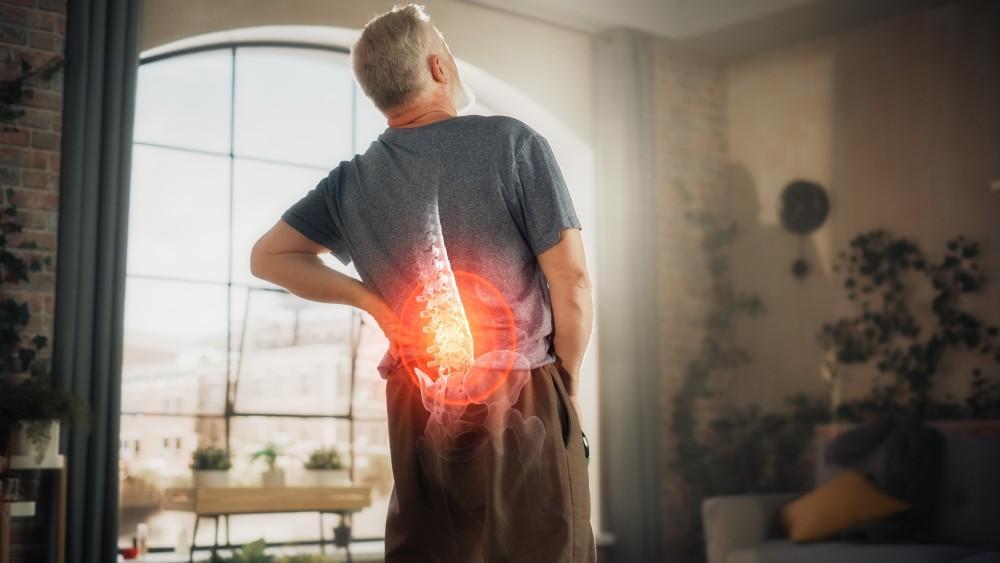
Back pain affects almost everyone at some point in life. In fact, about 80% of people experience it at some point.
The good news is that 90% of cases resolve by themselves within 12 weeks, but what about the ones that don’t — and how do you know when it’s time to consult a spinal surgeon for your pain and discomfort?
Dr. Benjamin Cohen specializes in advanced care and performs complex spinal surgeries that require medical and surgical expertise, state-of-the-art technology, and a commitment to meeting each patient’s unique needs.
He leaves no stone unturned when it comes to hearing your story, determining a diagnosis, and creating a customized care plan tailored to each patient’s needs.
When does back pain point to the need for surgery?
There’s a wide range of back pain and other symptoms that can make you uncomfortable — but some can stop you in your tracks by causing severe pain, limited movement, and more concerning symptoms.
Here are some conditions — and the symptoms that accompany them — that may prompt you to make an appointment with Dr. Cohen.
We should add that, with almost any condition, symptoms can vary in severity. Dr. Cohen’s initial treatment approaches typically involve noninvasive or minimally invasive conservative treatments, like anti-inflammatory medications, physical therapy, and steroid injections.
He recommends surgery when symptoms become life-altering.
1. Spinal stenosis
Spinal stenosis can cause pain in your lower back or cervical spine (neck), and it can also lead to leg and arm tingling, numbness, muscle weakness, leg cramps, and leg pain.
Surgery may be necessary if you develop symptoms when the nerves at the base of your spine become pinched — this can cause intense back pain, a complete loss of feeling in your legs, and even bowel and urinary incontinence.
If you suffer from these symptoms, Dr. Cohen performs one of these procedures:
- Spinal fusion, where two vertebrae are fused surgically to improve spinal stability
- Discectomy, where Dr. Cohen either trims or removes a problem disc completely
- Decompressive laminectomy opens up spinal space as it removes a vertebra’s upper portion
- Foraminotomy is a procedure that expands the opening where your nerves exit your spine
Each offers sought-after relief from alarming symptoms.
2. Degenerative disc disease
When discs decay from drying out, aging, injury, and other issues, you lose spinal stability, and your nerves become painfully compressed. Again, the pain can be manageable and intermittent, but surgery is needed if it becomes disabling and constant. You may also experience severe, life-limiting muscle spasms.
Degenerative disc disease can also cause a pinched nerve, leading to nerve pain, numbness, and tingling that can radiate down your arms or legs.
If you’re suffering agonizing symptoms, Dr. Cohen may recommend disc removal surgery followed by spinal fusion, or he may want to replace your damaged disc with an artificial one.
Scoliosis is a condition in which your spine develops a “C”- or “S”-shaped curve. Mostly children and adolescents are diagnosed, but adults can be affected too.
If the curvature isn’t severe, you may need no treatment, but if it exceeds 40-50°, stabilization surgery can address worsening pain and, importantly, stop progression. This involves Dr. Cohen placing metallic implants that keep the spine properly placed and straight.
Surgical solutions to scoliosis also include spinal fusion, spinal reconstruction, and spinal decompression surgery.
4. Spinal fractures
A traumatic accident, like a car collision or a fall from a great height, causes a spinal fracture, but a certain type of spinal fracture — a spinal compression fracture — is an effect of osteoporosis (brittle bone disease), which affects about 10 million Americans. This happens when a vertebra can no longer support the weight your spine carries and shatters.
Though Dr. Cohen offers multiple surgical options to address spinal fractures, several he recommends are:
- Lumbar vertebral body replacement with removal of the fractured portion and bone grafting
- Vertebroplasty, where the collapsed vertebra is injected with a special cement
- Kyphoplasty, where a balloon restores a bone’s height before a cement injection
Dr. Cohen considers multiple factors before deciding which procedure is right for you.
5. Revision spine surgery
When a previous back surgery fails, many patients need revision spine surgery to correct the issues that have developed, which can be serious. Dr. Cohen’s approach depends on the patient’s particular circumstances and case.
Whenever possible, Dr. Cohen performs minimally invasive surgery, which involves small incisions and specially designed equipment. This approach leads to faster recovery, less pain, reduced bleeding, and less scarring.
If you’re dealing with severe back pain and other symptoms, contact our Garden City office at 516-246-5008 for expert consultation and relief.